

Integrating an external logistics service provider (3PL) enables companies to scale their warehousing and logistics processes flexibly, optimize costs, and increase transparency throughout the supply chain. The key to success lies above all in the reliable integration of business processes and the systems involved.
Why is it worth working with a 3PL provider?
Working with a 3PL provider enables companies to scale their logistics processes flexibly, leverage specialized expertise, and reduce investments in their own warehousing and logistics infrastructure.
External logistics partners can provide additional flexibility, particularly in the face of growth, seasonal fluctuations, or international supply chains. Companies can focus more on their core business while specialized service providers handle specific warehousing, transportation, or fulfillment processes.
Typical benefits include:
- Flexible scaling of storage capacity
- Support for International Supply Chains
- shorter delivery times
- Professional Returns Management
- greater transparency regarding inventory and goods movements
How are external logistics service providers integrated from a technical standpoint?
3PL service providers are connected to ERP, warehouse, and transportation management systems via standardized interfaces and integration platforms. What matters most are stable, transparent, and maintainable processes – not the greatest possible technical complexity.
Integration takes place, for example, between ERP systems such as SAP S/4HANA or Microsoft Dynamics 365 and the logistics service provider’s warehouse and transportation management systems.
While SAP PI/PO-based integration scenarios were commonly used in the past, modern cloud integration platforms are now increasingly available, including:
- SAP Integration Suite on the SAP Business Technology Platform (BTP)
- Microsoft Azure Integration Services
- MuleSoft
- Boomi
Depending on the requirements, different standards and formats continue to be used for the actual data exchange:
- EDI, such as EDIFACT
- APIs
- XML and JSON
- CSV-based exchange formats
Not every process requires real-time integration. What matters is that information is exchanged completely and reliably between the systems involved at the right time.
Are you planning to integrate an external logistics service provider or looking to modernize an existing 3PL integration? We support you with the design and technical implementation – from process design to the integration of your ERP, warehouse, and logistics systems.
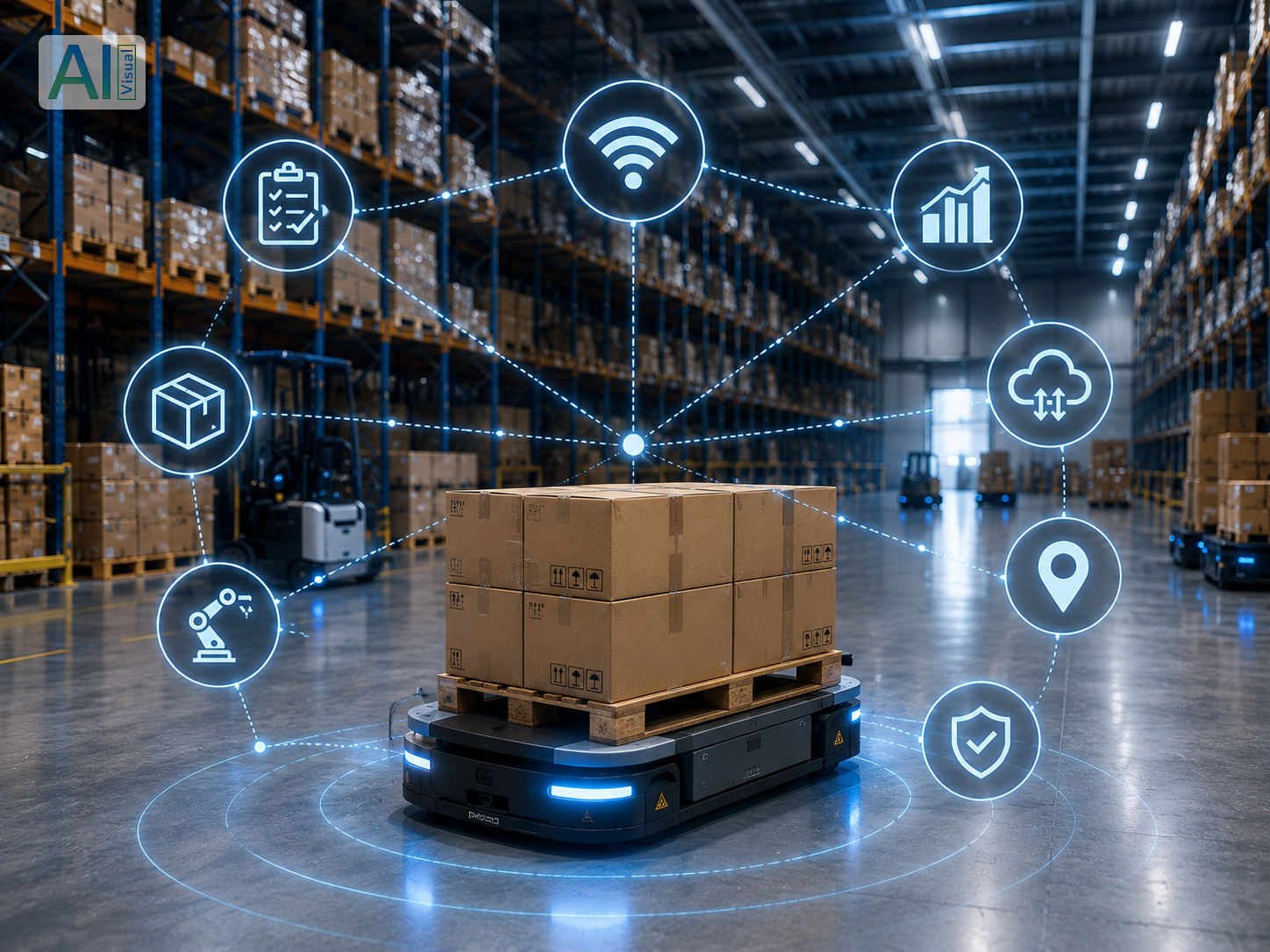
The efficiency of connecting an external logistics service provider
What role does SAP EWM play in connecting with 3PL service providers?
SAP EWM helps companies manage complex warehouse processes and can play a central role in integrating external logistics service providers into SAP S/4HANA environments.
As the SAP system landscape continues to evolve, the technological foundation of warehouse logistics is also changing. While many companies have traditionally managed their warehouse processes using SAP WM based on SAP ECC, the focus today is primarily on SAP Extended Warehouse Management (SAP EWM) and SAP S/4HANA-based warehouse processes.
Depending on your requirements, options include SAP EWM as well as simpler warehouse management scenarios within SAP S/4HANA.
SAP EWM supports, in particular, more complex requirements such as:
- complex warehouse structures
- Automation Technology
- MDE and Scanner Integration
- Yard Management
- Resource Management
- High transparency regarding warehouse processes
In 3PL scenarios, however, the warehouse management system used is not the only decisive factor. Equally important is the end-to-end design of the processes linking orders, inventory, goods movements, shipping, and feedback to the ERP system.
What service standards should be agreed upon with a 3PL provider?
Clear service level agreements define measurable quality and performance goals for working with a 3PL provider. They create transparency and make it possible to identify deviations early on and continuously improve logistics processes.
Appropriate metrics depend on the specific business model and scope of services. Typical KPIs include:
- On-Time Delivery
- Picking and Packing Quality
- Inventory Accuracy
- Lead Times
- Return Rate
- Complaint Rate
It is important not only to define target values. The data source, measurement method, responsibilities, and procedures for handling deviations should be defined just as clearly.
How can transparency be achieved regarding external logistics processes?
Transparency is achieved through seamless data exchange between ERP, warehouse, transportation, and 3PL systems. Dashboards and reporting solutions can then make this data accessible to business units and process managers.
This allows for centralized monitoring of, for example, inventory levels, goods movements, shipment statuses, and agreed-upon KPIs. Bottlenecks or deviations become apparent earlier and can be addressed in a targeted manner.
Modern reporting solutions support, among other things:
- Inventory Overviews
- Tracking the Movement of Goods
- Shipment Tracking
- KPI Monitoring
- Identification of Bottlenecks
However, technical integration is only the foundation for this. Equally important are standardized process definitions, data quality, and clear lines of responsibility between companies and logistics service providers.
What determines the success of a 3PL integration?
A successful 3PL integration results from the interplay of clearly defined business processes, appropriate integration technology, reliable interfaces, and transparent collaboration with the logistics service provider.
Technologies and integration platforms have continued to evolve in recent years. Proven standards such as EDI continue to play an important role, while APIs and cloud integration platforms create additional opportunities for modern integration architectures.
In the SAP environment as well, warehouse logistics are changing as part of the transition to SAP S/4HANA. SAP EWM plays a central role in managing more complex warehouse processes.
However, the key is not to implement as many new technologies as possible. The right solution depends on the business processes, the required level of integration, and the requirements for stability, transparency, and scalability.
Would you like to reliably integrate your 3PL processes into your existing system landscape?


