

With the end of support for SAP AFS in 2027, many companies, including retailers and wholesalers, face the challenge of migrating their systems to a more modern platform. SAP S/4 Fashion is the latest ERP solution from SAP, specifically designed for the fashion industry.
Why is the migration from SAP AFS to SAP S/4 Fashion necessary?
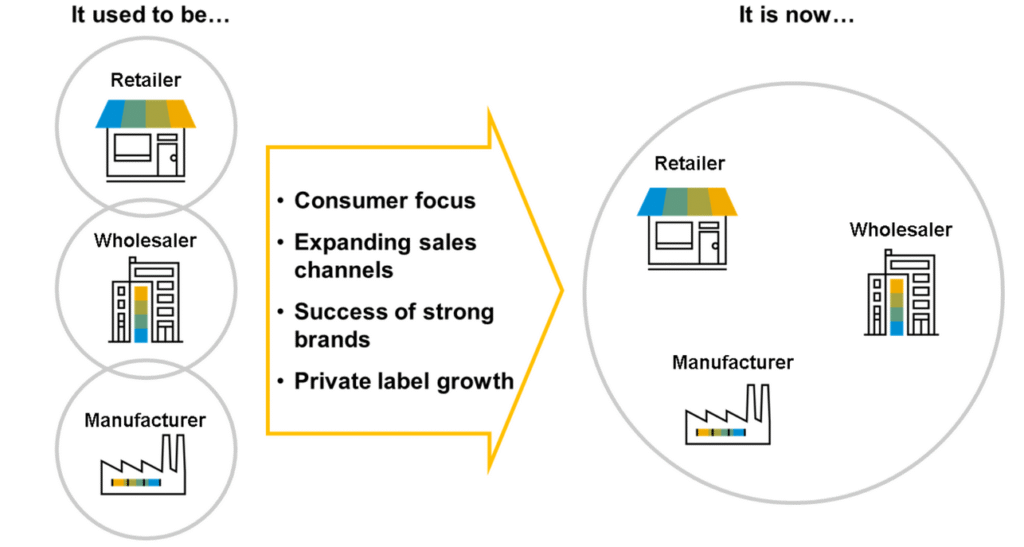
Advantages of migrating from SAP AFS to SAP S/4 Fashion (source: SAP SE)
The migration from SAP Apparel and Footwear Solution (AFS) to SAP S/4 Fashion is a significant step for companies in the fashion industry who want to digitalize and optimize their business processes. This transformation offers numerous advantages, including a unified platform for all business areas, real-time processes and advanced analytics. SAP AFS, the Apparel and Footwear Solution, is a specialized ERP solution specifically designed for the needs of the fashion industry. With the end of support for SAP AFS in 2027, many companies, including retailers and wholesalers, face the challenge of migrating their systems to a more modern platform. SAP S/4 Fashion is the latest ERP solution from SAP, specifically designed for the fashion industry. The solution is based on the SAP S/4HANA platform and offers real-time processes, advanced analytics and high agility.
What advantages does SAP S/4 Fashion offer compared to SAP AFS?
The main reasons for migrating from SAP AFS to SAP S/4 Fashion lie in the modernization and optimization of business processes. SAP S/4 Fashion offers a unified platform, real-time processes and advanced analytics that enable deeper insights and better decision-making. In addition, Extended Warehouse Management (EWM) optimizes warehouse management and improves efficiency in logistics. The system offers real-time tracking of inventory movements, which enables more precise inventory control and avoids overstocks and shortages. It also integrates complex supply chain logistics with warehouse and distribution processes, ensuring maximum visibility and control. Material inspection and the automated creation of follow-on documents such as deliveries and goods receipt postings also contribute to increased efficiency. These advantages are particularly relevant for distributors and suppliers.
What approaches and resources are required for the migration? And how is the data migration from SAP AFS to SAP S/4 Fashion carried out?
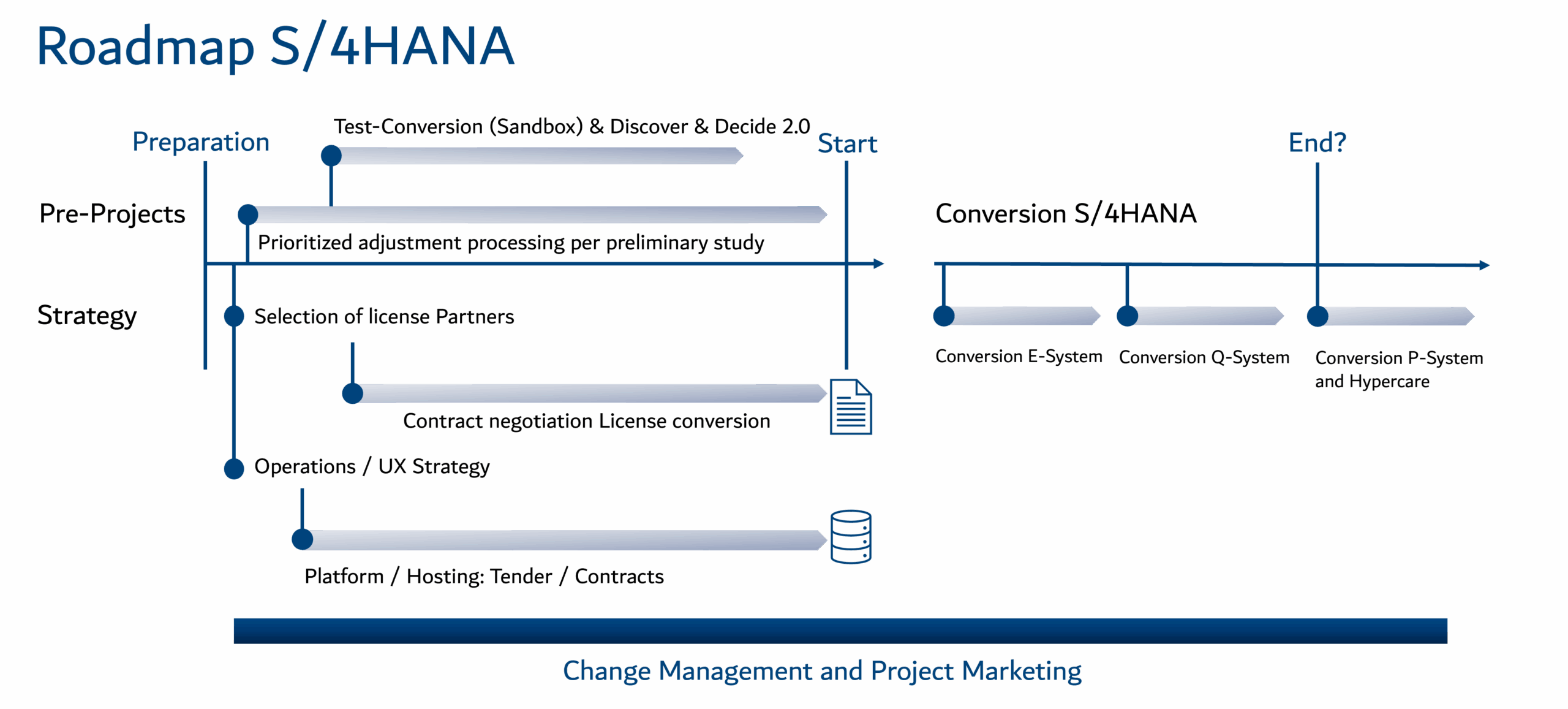
Roadmap of the migration from SAP AFS to SAP S/4 Fashion
The migration from SAP AFS to SAP S/4 Fashion can take between six months and two years, depending on the complexity of the project. Companies can choose between different migration approaches: Greenfield (completely new implementation), Brownfield (system conversion) and Bluefield (hybrid approach). SAP offers a predefined roadmap and the RISE with SAP program to support the migration process. SAP provides tools such as the SAP S/4HANA Migration Cockpit to facilitate the migration of master data and open transaction data. Before the migration, data cleansing and adjustments must be carried out to ensure data quality. This is particularly important for data migration in the area of purchasing management and inventory management.
What impact does the migration have on existing business processes and systems?
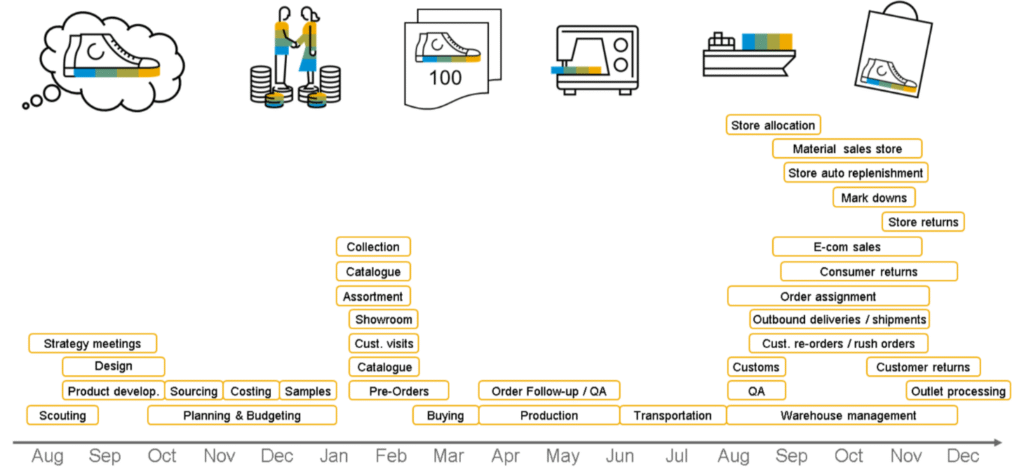
What changes in the process after the migration from SAP AFS to SAP S/4 Fashion? (source: SAP SE)
Some of the biggest challenges of SAP AFS are the complex system architecture, lack of real-time data, difficulties in warehouse management, inefficient returns processing and a user-unfriendly interface. SAP S/4 Fashion addresses these problems with a modern, in-memory-based architecture, real-time analyses and processes, integrated Extended Warehouse Management (EWM), optimized returns processing and a user-friendly interface. These technological improvements are based on a completely new system architecture, which represents a decisive difference between SAP AFS and SAP S/4 Fashion. SAP S/4 Fashion uses the SAP S/4HANA platform and benefits from a high-performance, in-memory-based technology. Comprehensive training is required for successful implementation, both for end users and for the project team, in order to cover technical and functional aspects of the new solution. This also affects the system landscapes and the integration of e-commerce and production.
With the end of support for SAP-AFS, the reorientation with Fashion is coming. XEPTUM already has extensive experience with data migration and AFS and we are happy to help you take the next step with SAP S/4 Fashion.


